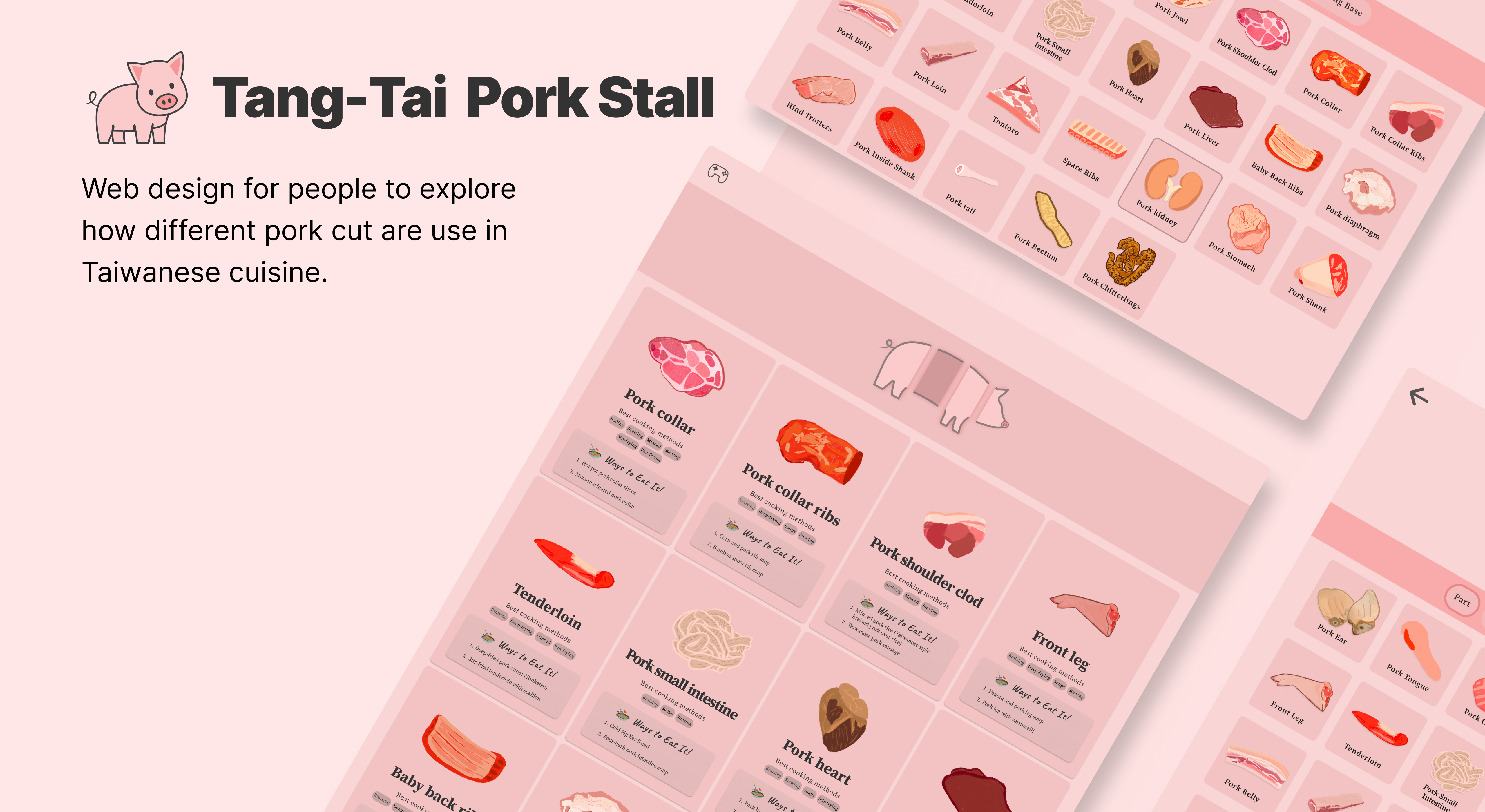
Tang-tai pork stall hero image

Interactive Web

Tang-Tai Pork Stall

An interactive pork anatomy site that bridges language gaps and cooking knowledge.

BACKGROUND

My family runs a pork stall in local market in Taiwan, and I grew up watching them introduce different cut of meat to customers.
One day, a foreign customer pointed at “pork collar” and asked me which part it was ?
I couldn’t explain it in English. That moment made me realise that everyday food carries hidden language and cultural gaps.

PROBLEM STATEMENT

  1. Most existing pork diagrams only show the main meat parts, while head meat, ears, and organs, which are common in Taiwanese dishes, are rarely labeled or visualised.
  2. Both foreign residents and local home cooks often don’t know which cuts are suitable for certain dishes.
  3. There is no interactive website that presents the whole pig, including the head and organs, together with suitable cooking methods and multilingual accessibility.

CONCEPT

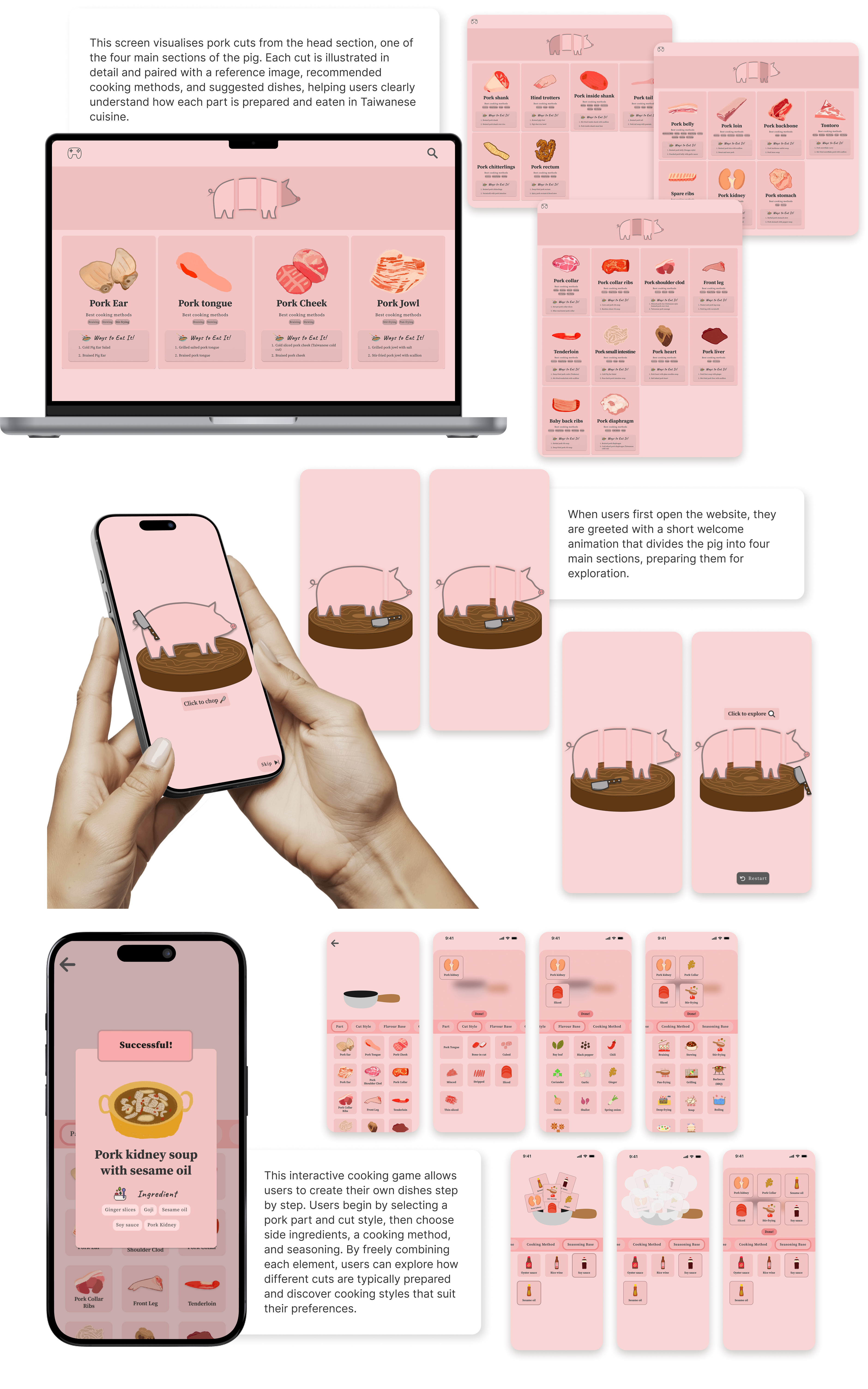
I designed an interactive pork anatomy website that divides the pig into four main sections.
Users can see where the meat they usually eat comes from and use the search function to locate specific cuts.
Each clickable area reveals details about the name, cutting style, seasoning, and recommended cooking methods, presented through a playful interface.
The site currently supports Chinese and English, with plans to expand into Vietnamese, Thai, and Indonesian to make it inclusive for multicultural users in Taiwan.

DESIGN GOALS

  1. Redefine everyday food culture through interactive design.
  2. Visualise the entire pig which including the head and organs.
  3. Translate traditional market culture into a digital experience.

USER PERSONA

A-Rong

A-Rong

Age
48
Family
Married, 1 Child
Nationality
Taiwanese
Role
Pork Stall Owner

BACKGROUND

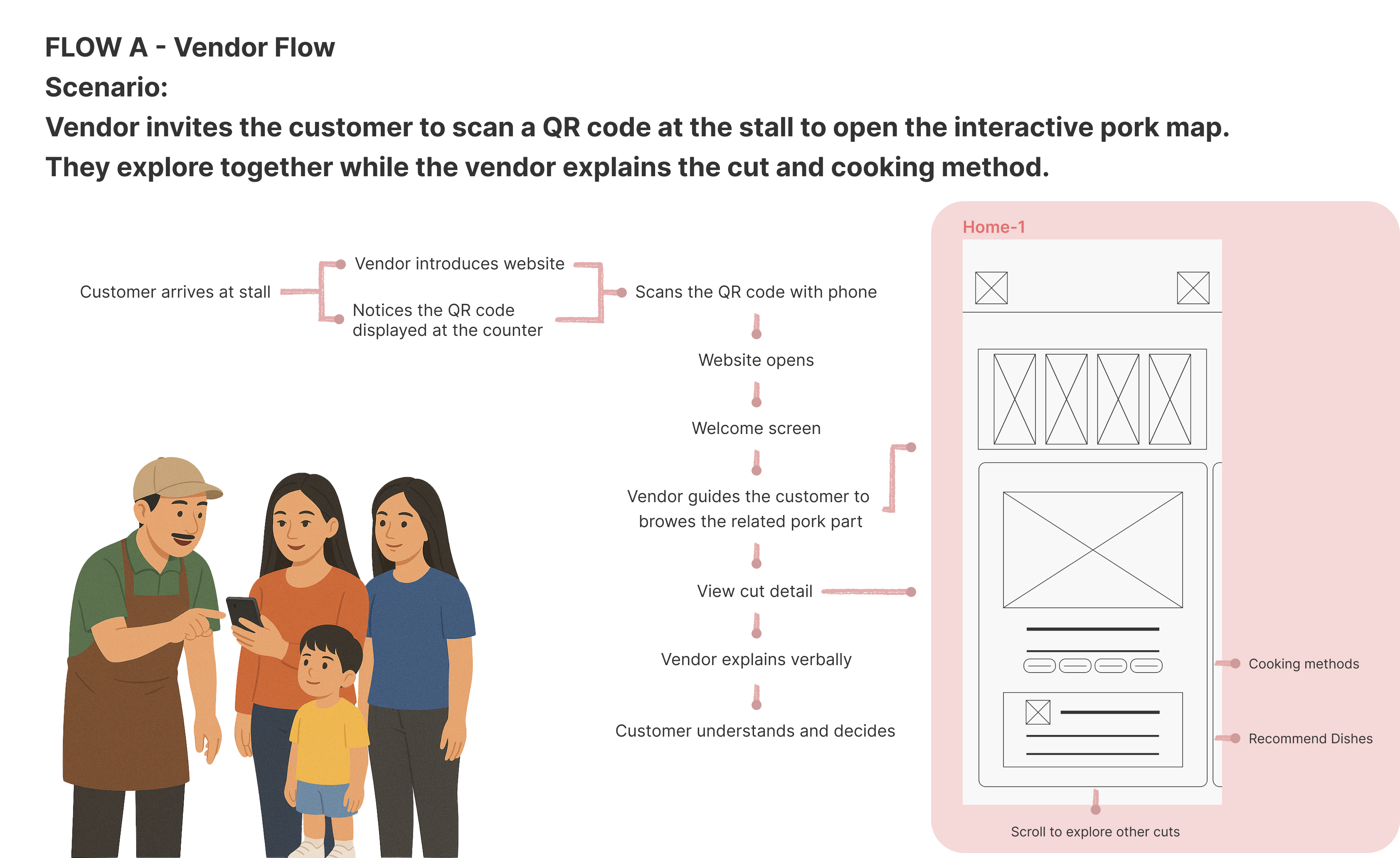
A-Rong runs a traditional pork stall and interacts with dozens of customers daily, both local and foreign.
He spends most of his time explaining the differences between similar cuts and how to cook them.

NEEDS

  1. A visual and multilingual tool that supports quick explanations of each cut.
  2. A QR code that customers can scan to access the website directly during conversation.

PAIN POINTS

  1. Customers often confuse similar cuts such as pork collar, belly, and loin.
  2. He finds it difficult to communicate with foreign customers.

GOALS

  1. Have a clear and visual pork diagram that helps customers easily understand where each cut comes from and how to cook it well.
  2. Embrace emotions with foreign buyers.
Yi-Chun ,Lin

Yi-Chun ,Lin

Age
28
Family
Married, 1 Child
Nationality
Taiwanese
Role
Office worker & home cook

BACKGROUND

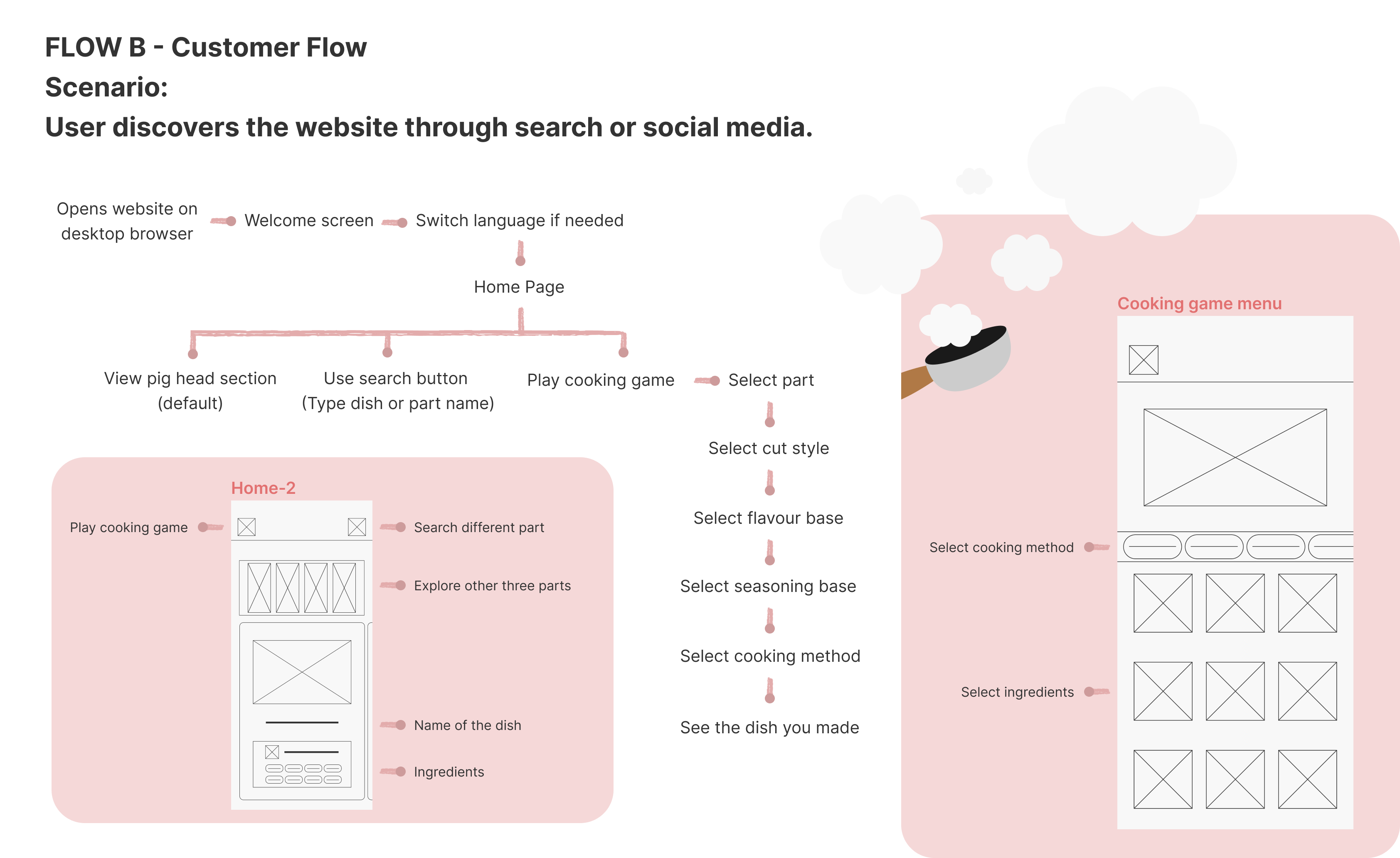
Lin wants her family to eat healthier, so she started learning how to cook and often shops at local markets, but she’s not confident in identifying pork cuts or matching them with dishes.

NEEDS

  1. A clear and interactive diagram to learn about cuts.
  2. Cooking methods suggestions for each part.

PAIN POINTS

  1. Does not know which cuts are best for braising, frying, or soups.
  2. Finds online information too fragmented and complicated.

GOALS

  1. Choose the right cut for each dish.
  2. Learn more about pork in an easy and visual way.
Lan Phương Nguyễn

Lan Phương Nguyễn

Age
28
Family
Single
Nationality
Vietnamese
Role
Long-term care worker living in Taiwan

BACKGROUND

Nguyễn recently moved to Taiwan , where she now works as a live-in caregiver for elderly people. She cooks for the elderly family she cares for and often visits local markets to buy ingredients, but she finds it difficult to communicate with stall owners due to the language barrier.

NEEDS

  1. A multilingual, visual website that helps her identify pork parts quickly.
  2. Simple translations and cooking suggestions suitable for everyday meals.

PAIN POINTS

  1. Cannot read Chinese signs or understand the pronunciation of meat cuts.
  2. She finds it difficult to communicate with stall owner.

GOALS

  1. Learn the Chinese names and locations of pork cuts used in daily cooking.
  2. Communicate confidently with vendors when buying meat.

USER FLOW

User Flow A User Flow B

LOGO DEVELOPMENT

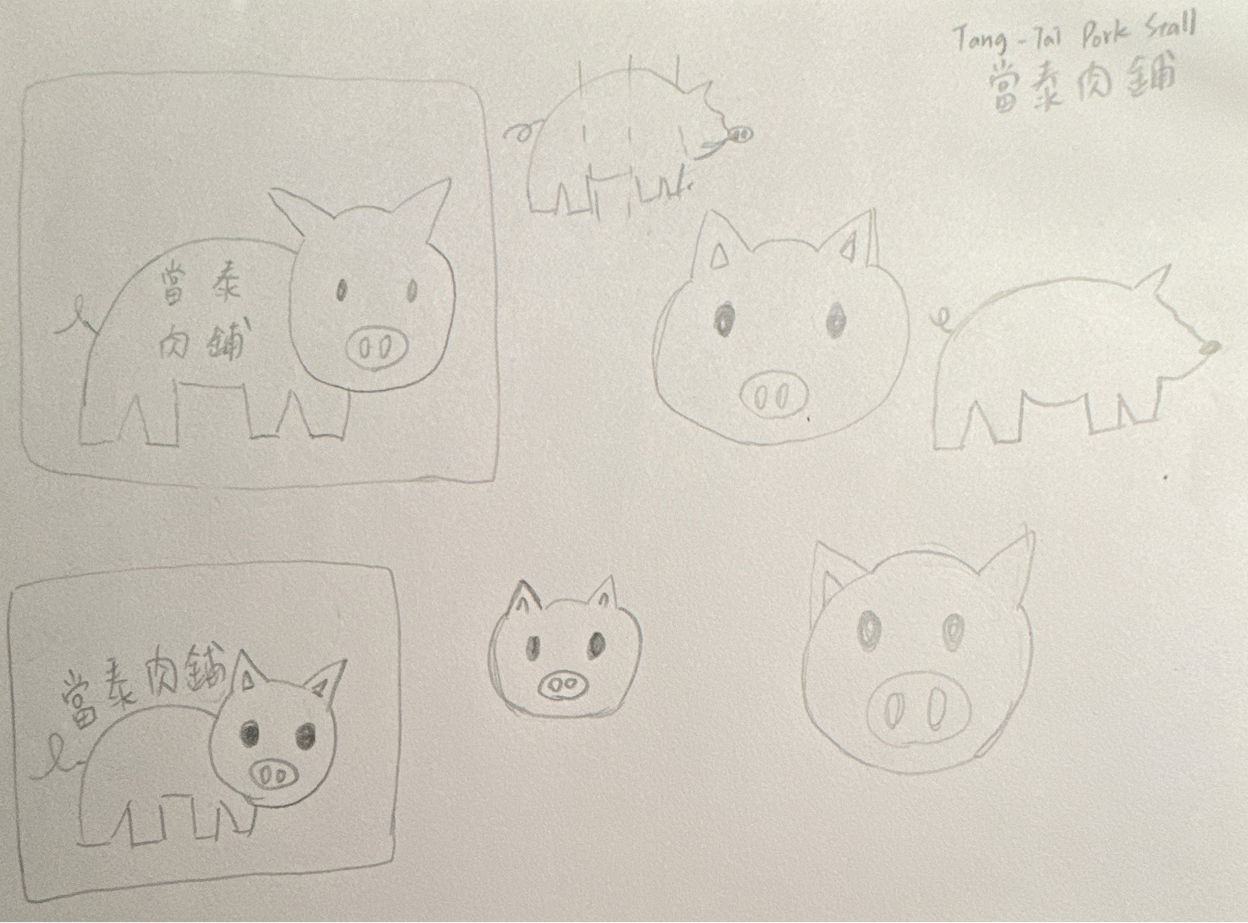
Early Sketches

Sketching the pig icon and experimenting with the placement of typography to find a clear and balanced composition. At the same time, a flat anatomy layout was explored to represent the pig divided into four main sections.

Sketch sheet

Final Sketches

Converting the sketches into a clean and scalable vector illustration using Adobe Illustrator for web display.

Final sketch photo
Small Steps logo mark

VISUAL IDENTITY

Source Serif Pro

Typography

#FFDEDE
#F2C3C3
#5A5A5A
#333333

Colour Palette

Logo

USER INTERFACE

UI 1